
Frozen water or heating pipes - safe professional thawing across Riga, also nights and weekends
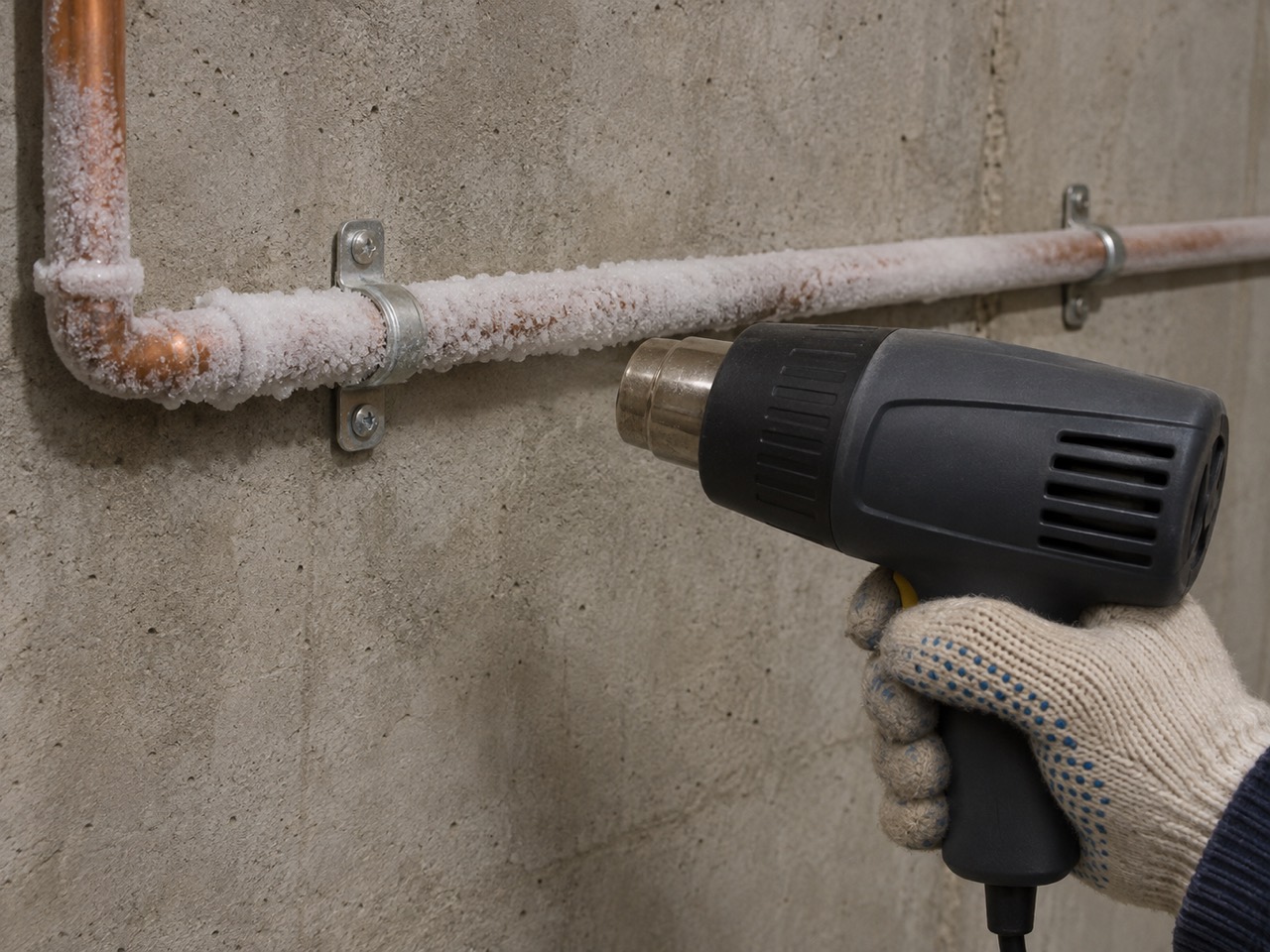
During Latvia's cold winters, frozen pipes are a common problem - especially in older buildings, houses with exterior wall pipes and unheated spaces. Here's what to look for.
The most common sign - you turn on the tap but nothing comes out, or only a very weak flow
Visible frost on the pipe surface, or it feels significantly colder than the surroundings
The pipe is completely frozen - water cannot flow at all
Uninsulated pipes in exterior walls, basements or unheated verandas are most at risk
Risk increases significantly during severe cold, especially if heating has been interrupted
Audible clicking or crackling in the pipes may indicate the early stages of freezing
Taking the right steps can prevent a much more serious problem - a burst pipe that causes flooding.
This reduces pressure on the frozen pipe and reduces the risk of a burst when the pipe starts to thaw.
Do not use gas torches, candles or any open flame. This can cause the pipe to burst and start a fire.
Our plumber uses safe thawing methods and checks whether the pipe has sustained any damage.
If the frozen pipe is in a heated space, raise the temperature. For pipes in basements or verandas - wait for the plumber.
Frozen pipes are thawed gradually so that they are not damaged. Thawing - we use industrial heaters and hot water methods that ensure even, gradual thawing without thermal shock to the pipes. Damage assessment - after thawing we inspect for any cracks or micro-fractures that may have developed. Prevention - we recommend and install insulation to prevent re-freezing in future seasons. We also work evenings, nights, weekends and public holidays whenever a plumber is free.
Book NowDepends on accessibility and extent of freezing
If damage is detected after thawing
Preventive protection against re-freezing
* Price confirmed before work begins - no hidden fees.
An outdoor or garden tap on a private house freezes more often than any other pipe, because its supply runs through the outer wall. If water stays in the pipe inside the wall over winter, it freezes and the pipe bursts, often inside the wall, where the leak is only noticed in spring.
There are two safe solutions. The first is a frost-proof tap: its valve sits on the warm side of the wall, and when you turn the tap off, the water drains out of the outer part by itself. The second is an ordinary outdoor tap with a shut-off valve and a drain valve inside the house, which you close and drain in autumn.
We work on the house side: the supply, the valve, the hole through the wall and the tap. We agree the price before the work. For the whole summer house system, see winterising a summer house water system.
If a house or summer house is not heated in winter, the safest way to avoid frozen pipes is to drain the water system before the frost. Water left in the pipes expands as it freezes and can split pipes, mixer taps and the water heater (boiler).
Shut off the supply
Close the main valve, or disconnect the well pump and the pressure tank from the power.
Open all taps
Open the hot and cold water on every tap and shower so that air can enter the system.
Drain the water heater
First switch off the power, then drain the tank.
Drain the lowest points
Open the drain cocks; if there are none, blow the water out of the pipes with a compressor.
Tanks and traps
Empty the toilet cistern, the pressure tank and the washing machine hoses. Pour antifreeze into the traps so they do not freeze and no smell rises.
In spring, refill the system slowly with the drain cocks closed, and check the joints before switching on the water heater. If the house has a water-based heating system, it is drained or filled with antifreeze separately. If the well pump also needs preparing, see well pump repair.
After submitting, we'll call you within 5 minutes!
We'll call you within 5 minutes!