
Replacing a radiator in an apartment on central heating is not a job you can order on any day: it needs the house manager's approval, the heating riser has to be drained, and it is done after the heating season. In a private house the system is yours, and the radiator can be replaced whenever suits you. Radiator replacement costs from €70 per radiator, and we agree the price before the work starts.
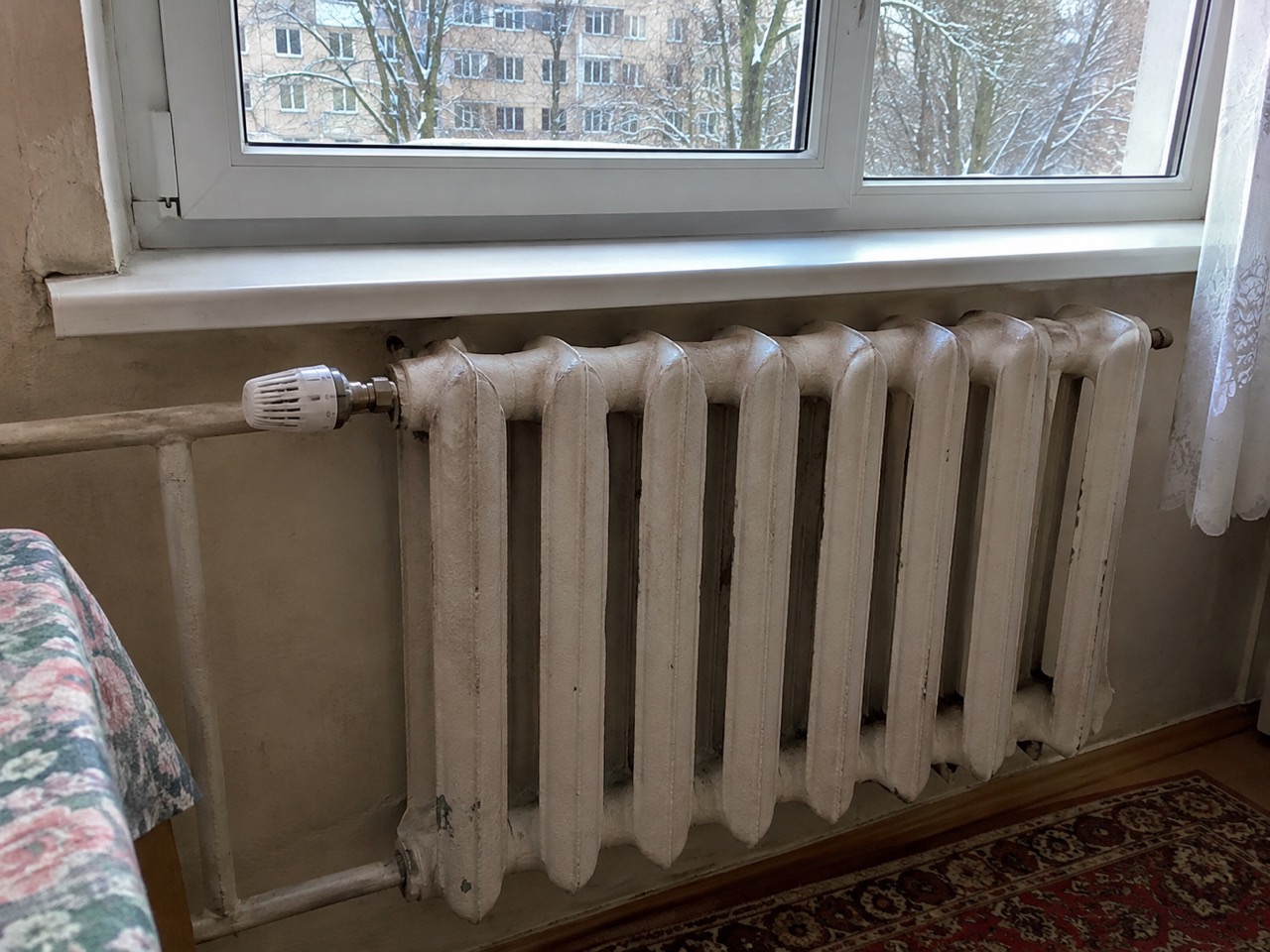
A radiator connected to the building's heating riser is part of the whole building's heating system. The Apartment Property Law (Dzīvokļa īpašuma likums) also counts heating elements inside the apartment as common property if their operation depends on the shared utility systems. That is why radiator replacement is always agreed with the house manager.
Under the Rīgas namu pārvaldnieks procedure, technical documentation with a calculation of the apartment's heat loss has to be prepared before the replacement. On that basis the size, type and connection layout of the new radiator are chosen, and the documentation is approved by the district heating engineer. Other house managers may have different requirements, so ask yours in writing.
What to include in the application, and why an unapproved replacement can leave the neighbours without heat, is explained in the article radiator replacement approval in an apartment.
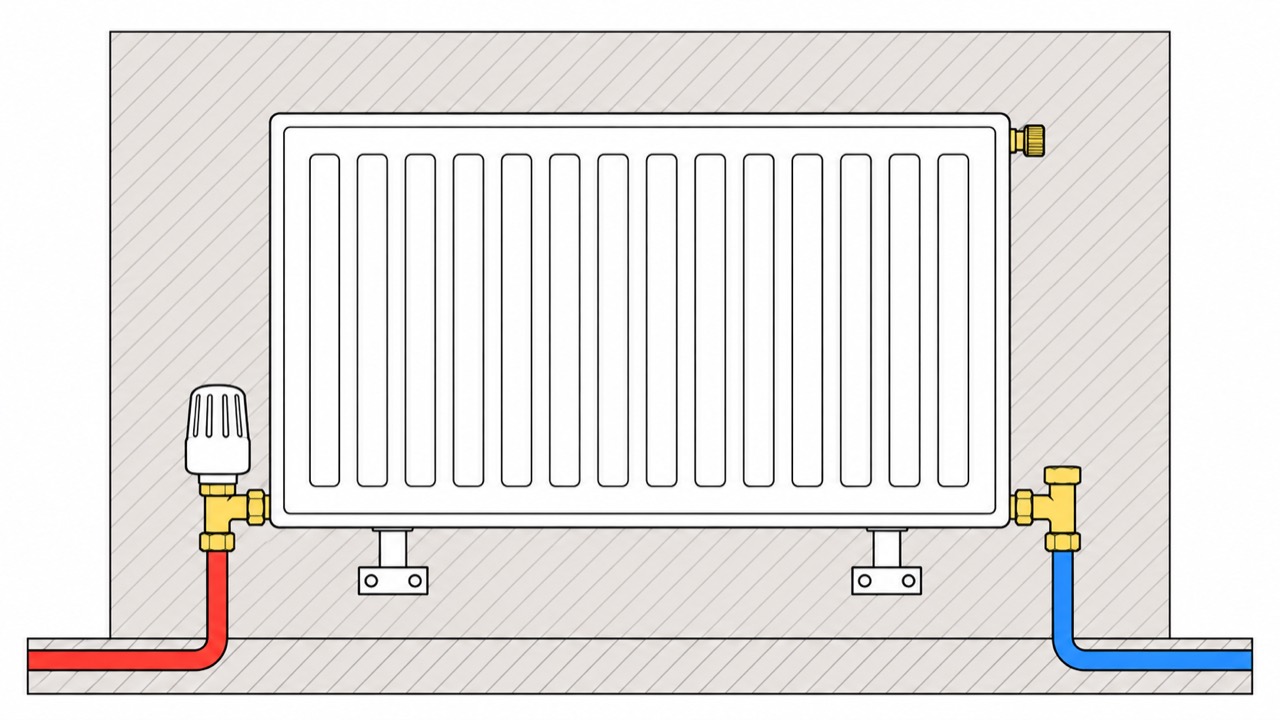
To remove a radiator, the heating riser has to be shut off and drained. The plumber does not do this: in Rīgas namu pārvaldnieks buildings draining the riser is a paid service ordered from the house manager, and after the work "Siltumserviss Rīga" carries out the hydraulic test, filling and bleeding of the system.
Rīgas namu pārvaldnieks states that radiators may only be replaced after the end of the heating season and before 1 September, with technical documentation approved in advance. If you are planning a replacement, start on the design documents and approval in spring so that the work can be done before that date.
If a radiator leaks in the middle of the heating season, it is an emergency: tell the house manager straight away. We help contain the leak in your apartment, see water leak repair.
In a private house the heating system belongs to you, and no approval from a house manager is needed. The work can be planned at any time, but during the heating season the house is left without heat for a while.
If the radiator has shut-off valves, it is often enough to close them and drain only the radiator. If there are no valves, the system or part of it has to be drained, then refilled and bled after the work. If the system contains antifreeze, it is collected and either reused or replaced.
If radiators heat unevenly throughout the house, the cause may be a clogged system rather than one radiator. In that case consider heating system flushing first.
Inspection and choice
We find out the old radiator's type, size and connection (side or bottom), and whether there are valves and a bypass. In an apartment the radiator is chosen according to the approved design documents.
Draining the water
In an apartment the riser is drained on the day set by the house manager. In a private house the valves are closed or part of the system is drained.
Removal
The old radiator is removed. A cast iron radiator is heavy, and carrying it out is a separate job.
Installation
The wall brackets, the valves, the bypass if planned, and the new radiator are fitted in the approved connection layout.
Filling and testing
The system is filled, the radiator is bled and the joints are checked. In an apartment this follows the house manager's procedure.
Radiator replacement costs from €70 per radiator. The price depends on removing and carrying out an old cast iron radiator, rebuilding the connections, and fitting a bypass and a thermostatic valve. The need to replace or move a riser section, the type of wall brackets and the number of radiators also matter. Replacing several radiators at once is better value, because the riser is drained only once.
The price does not include the radiator, valves, thermostatic head and brackets. Nor does it include technical documentation or a heat loss calculation if the house manager requires one, or shutting off, draining, filling and bleeding the riser, which the house manager does as a paid service.
Replacing a hot water towel rail follows a similar procedure, see towel rail replacement. If you are thinking about floor heating in the bathroom, see water underfloor heating installation. All jobs are on the plumbing services page.
| Service | Price | Notes |
|---|---|---|
| Radiator replacement | from €70 | for 1 radiator; radiator, valves and brackets extra |
Moving a radiator to another wall or replacing the heating pipes in an apartment changes the building's heating system more than swapping a radiator in the same place. New pipes, a longer supply or a different connection type affect the flow in the riser. That is why the LV portāls explanation says the connection layout must not be changed without a calculation.
In practice this means approval from the house manager first and, if required, a calculation or a design. Then the riser is drained on the day the house manager sets, outside the heating season, and the pipes and radiator are installed. After the work the house manager arranges refilling and bleeding of the system.
In a private house no approval is needed, but the system is drained and then refilled and bled after the work. Radiator replacement starts from €70, and we agree the price for pipe alterations after an inspection. If the radiator is intact but heats poorly, see radiator not heating and radiator repair.
Sources
After submitting, we'll contact you within 5 minutes!
We'll contact you within 5 minutes!