
Radiator repair is needed when a radiator leaks at a valve or joint, does not heat even after bleeding, or the thermostatic head no longer controls the heat. Most of these jobs are done without taking the radiator off the wall. Radiator repair costs from €40 per call-out, and we agree the price before the work starts.
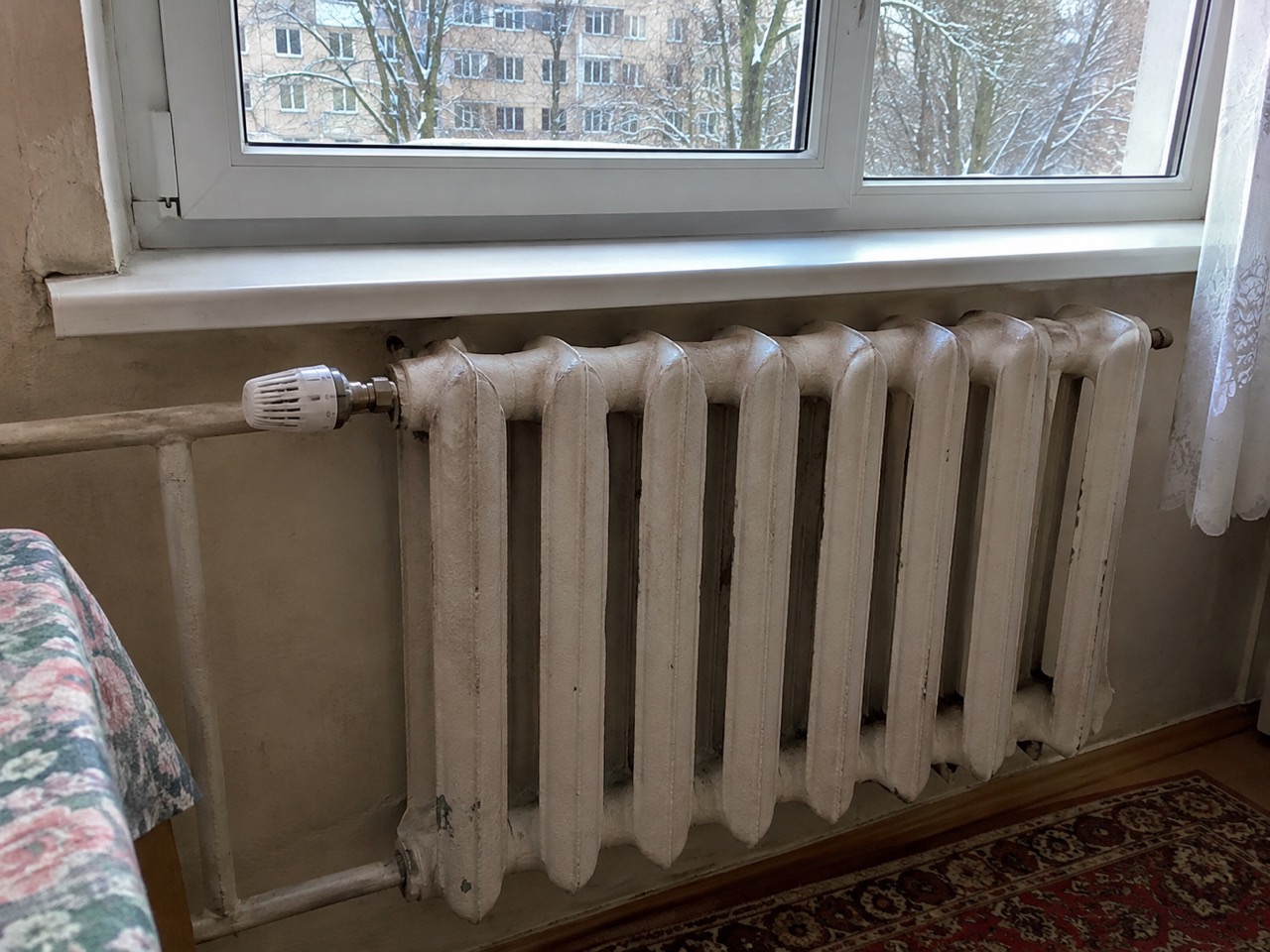
In an apartment building the radiator is connected to the building's heating riser. The riser is common property of the whole building, and the Apartment Property Law (Dzīvokļa īpašuma likums) also counts heating elements inside the apartment as common property if their operation depends on the building's utility systems. So whether the job can be done straight away depends on what exactly needs fixing.
A thermostatic head can be replaced and a radiator bled without shutting off the riser. If a valve or union nut has to be replaced or a leak at the radiator connection fixed, the riser usually has to be shut off and drained. That part of the job is done by the house manager, not the plumber. In Rīgas namu pārvaldnieks buildings the apartment owner orders shutting off and draining the riser from the house manager for a fee. Refilling, the hydraulic test and bleeding afterwards are done by "Siltumserviss Rīga".
So it is worth planning a valve replacement in an apartment outside the heating season and combining it with other work on the same riser, so that it is drained only once.
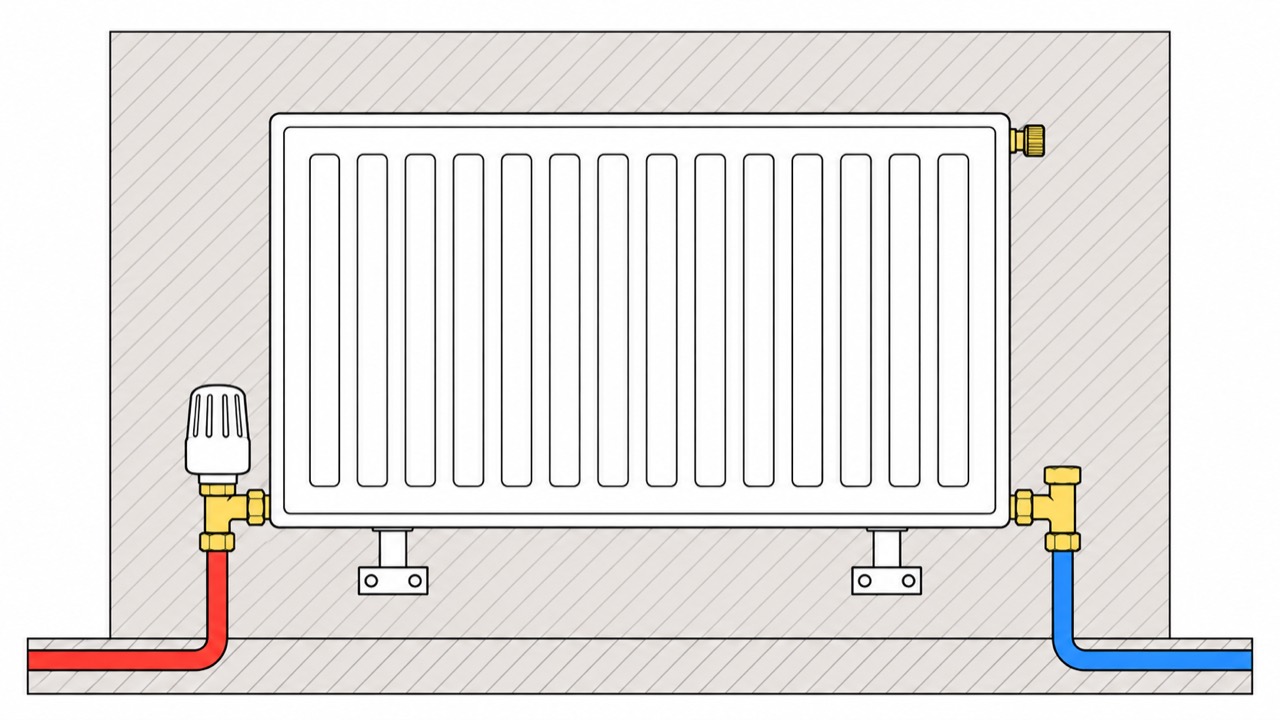
If a radiator is cold at the top but warm at the bottom, or you can hear gurgling in it, there is air inside. The bleed valve is in the top corner of the radiator, and many people can do it themselves, as described in the article radiator not heating.
You need a plumber if the valve is painted over, broken or will not turn, or if the air comes back after a few days. In an apartment, recurring air often means a problem in the riser or the building's system, and the house manager should be told. In a private house the most common causes are low system pressure, a small leak or a faulty automatic air vent, so the pressure is checked and the system topped up.
Most often the leak is at the valve stem, at the union nut (the nut between the valve and the radiator) or in the thread. The radiator body itself leaks less often, usually on old steel radiators after corrosion, and then a repair no longer pays off: radiator replacement is better value.
While you wait for the repair, keep a container under the leak and do not put a spanner on the nut, because old brass can split under force. If it leaks heavily in an apartment, tell the house manager straight away as an emergency and see water leak repair.
A thermostatic head is the control that screws onto a thermostatic valve. After some years its housing or sensor breaks, and it no longer closes or opens the valve. The head is replaced in a few minutes, and no water comes out, because the head does not touch the water.
The new head has to fit the valve's mounting: some valves have a standard thread, others a manufacturer's own mounting that needs an adapter. So before you buy, find out the valve manufacturer or write in the form what it says on the valve.
If the radiator has no thermostatic valve, a thermostatic head cannot be fitted: a new valve has to be installed first. In an apartment that means shutting off the riser and meeting the house manager's conditions, as explained in the article radiator replacement approval in an apartment.
Description
Describe what is happening in the form and write what it says on the valve. That shows which parts to bring.
Diagnosis
We check whether the problem is in one radiator or several, and whether the cause is the valve, a stuck thermostatic valve pin, air or sediment.
Shutting off the water
If the radiator has shut-off valves, they are closed. If not, in an apartment the house manager drains the riser, and in a private house part of the system is drained.
Repair
The gland seal, valve, union nut, air vent or thermostatic head is replaced, the thread is cleaned and the joint is reassembled.
Testing
Once the riser or system is full again, the air is let out and the new joints are checked to see that they stay dry under pressure.
Radiator repair costs from €40 per call-out, which covers one radiator. Each additional radiator on the same visit costs less. Bleeding and replacing a thermostatic head are short jobs, so we do not give a separate price for them: they are done within the call-out.
The price depends on whether the riser has to be shut off and drained, and whether the whole valve or only the thermostatic head has to be replaced. It also depends on where exactly the leak is (thread, union nut or body), whether an old steel or cast iron joint has to be cut, how many radiators are repaired at once and whether the system is under pressure because it is the heating season.
The price does not include materials (valve, thermostatic head, seals, union nuts) or shutting off, draining and refilling the riser, which the house manager does as a paid service at their own rates. Radiator replacement is a separate job, from €70.
If radiators in a private house still heat only partly after bleeding, the cause may be sludge in the whole system: see heating system flushing. If a hot water towel rail in the bathroom is leaking, the same riser rules apply: read about it on the towel rail replacement page. All jobs are on the plumbing services page.
| Service | Price | Notes |
|---|---|---|
| Radiator repair | from €40 | per call-out, 1 radiator; materials extra |
| Radiator replacement | from €70 | for 1 radiator |
Sources
After submitting, we'll contact you within 5 minutes!
We'll contact you within 5 minutes!