
A concealed toilet repair almost always happens through the button opening in the wall: the button and its frame come off, and behind them you can reach the fill valve, the flush valve and the shut-off valve. Opening the wall and tiles is usually not needed. The repair costs from €40 per call-out, parts extra.
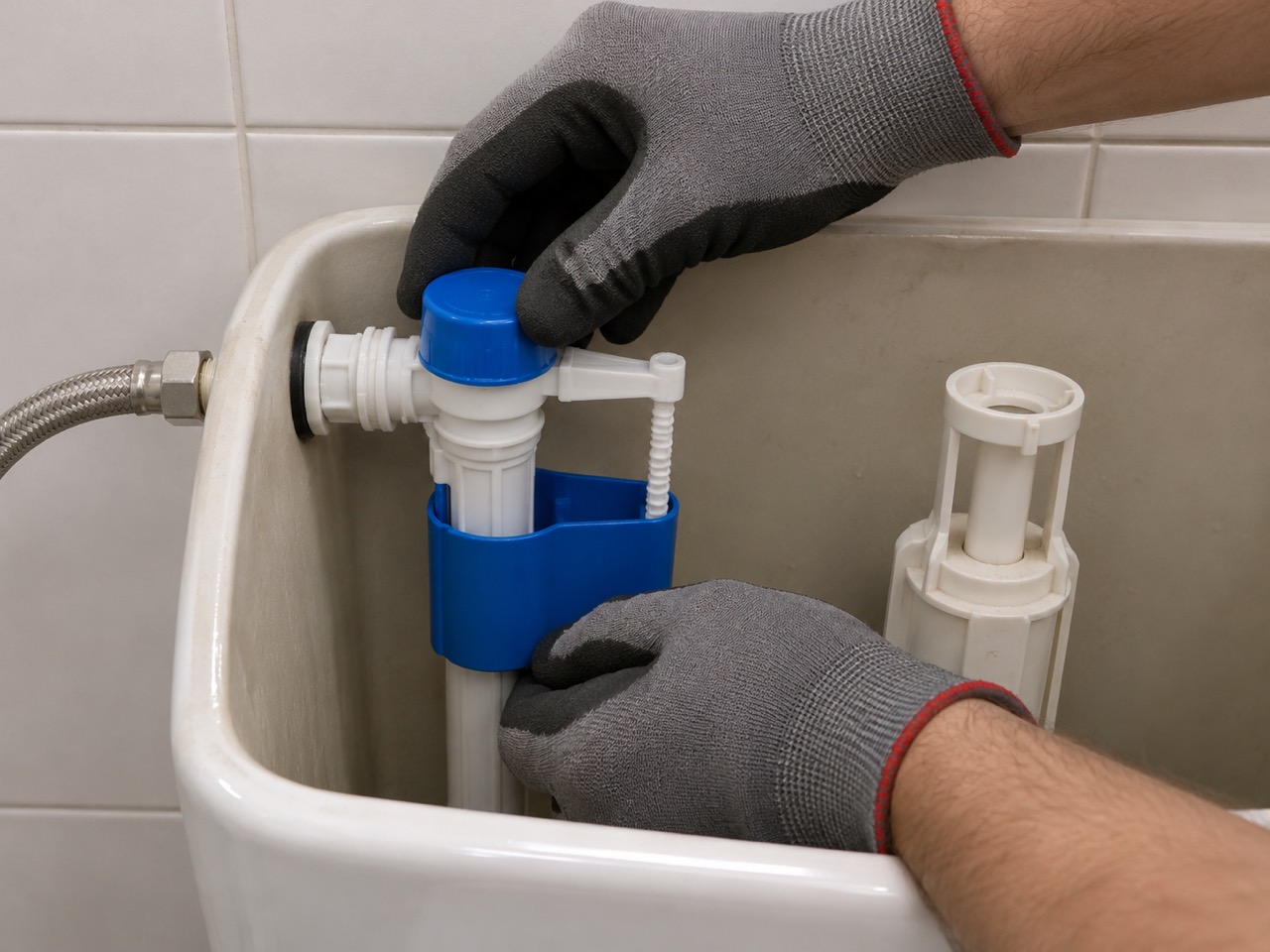
Constant running into the toilet is not just noise. It can waste a lot of water in a day, which you will see on the meter readings, so it is better to fix it quickly.
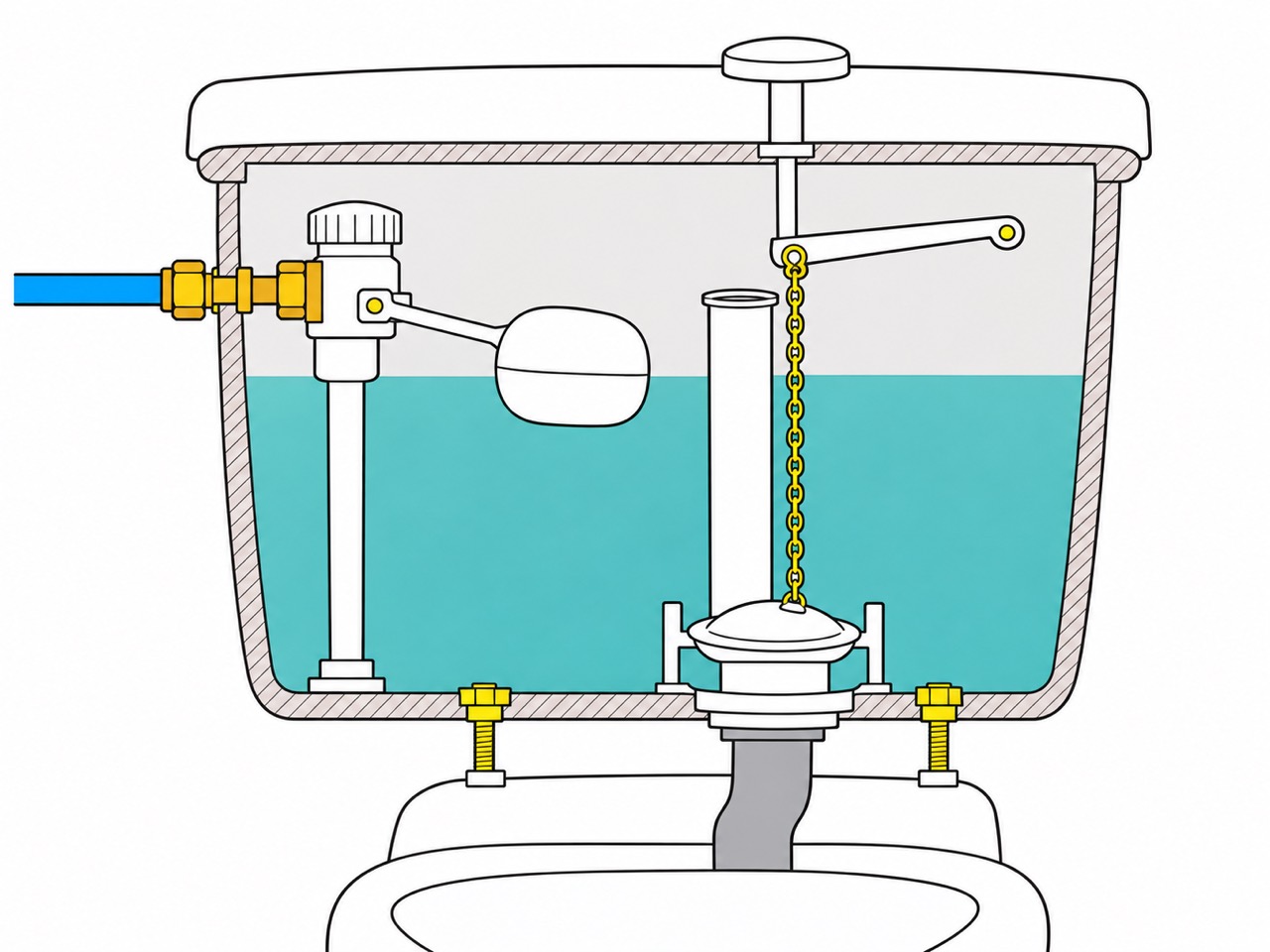
Removing the button
The button plate and its frame are removed. Behind them is a service opening into the cistern.
Shutting off the water
The shut-off valve is in the cistern itself, next to the fill valve. It is closed and the cistern is emptied.
Taking out the valve
The fill or flush valve is taken out through the opening. Manufacturers design cisterns so this can be done without opening the wall.
Replacement or cleaning
The seal, diaphragm or the whole valve is replaced, the filter is cleaned and the limescale is removed.
Adjustment and testing
The water level in the cistern and the volume of the full and half flush are adjusted, the button is refitted and the toilet is flushed several times.
Concealed cisterns are made by Geberit, Tece, Grohe, Viega and others, and each has its own valves and buttons. Parts are chosen by the cistern model, not just by the brand. The model can usually be identified by the button type and by the sticker or marking inside the cistern, which you see when the button is off.
Universal valves do not fit every cistern, and an unsuitable valve may leak or flush too little. That is why a photo of the open service opening will be useful when we get in touch: it lets us bring the right parts the first time.
Replacing a Geberit button is a separate, simple job if the new button is compatible with the cistern model. If the button is from another manufacturer or an older model, different button rods may also be needed.
If the supply behind the wall is leaking, the cistern body is cracked or the frame is loose on the wall, it cannot be reached through the button opening. Then the cladding has to be opened, and afterwards the plasterboard and tiles have to be restored, which is not plumbing work. Before that, we check everything that can be done through the opening.
If the frame is very old or damaged, a new concealed frame may be the better option: see toilet installation, a wall-hung toilet with frame from €150.
Concealed cistern repair costs from €40 per call-out for one toilet. The price depends on what has to be replaced (fill valve, flush valve, seal or button) and on the frame manufacturer, model and parts availability. It also depends on whether access is through the button opening or the wall has to be opened, whether the frame is old or non-standard, and the condition of the shut-off valve in the cistern.
The price does not include parts (valves, seals, button), opening the wall and restoring tiles if there is no service access, or installing a new frame.
For an ordinary floor-standing toilet with a visible cistern, see toilet and cistern repair, from €30. If water does not drain from the toilet, it is a drain problem: see drain cleaning. All jobs are on the plumbing services page.
| Service | Price | Notes |
|---|---|---|
| Concealed cistern repair | from €40 | per call-out, 1 toilet; parts extra |
| Wall-hung toilet installation with frame | from €150 | if the frame has to be replaced |
After submitting, we contact you within 5 minutes!
We will contact you within 5 minutes!