
Bath sealing means replacing the silicone joint between the bath and the wall: the old silicone is removed completely, the joint is cleaned and dried, and new sanitary silicone is applied. It is done when the joint is black with mould or peeling, or when water runs down the side of the bath onto the floor or through to the neighbours. We give the price after an inspection and agree it before the work starts.
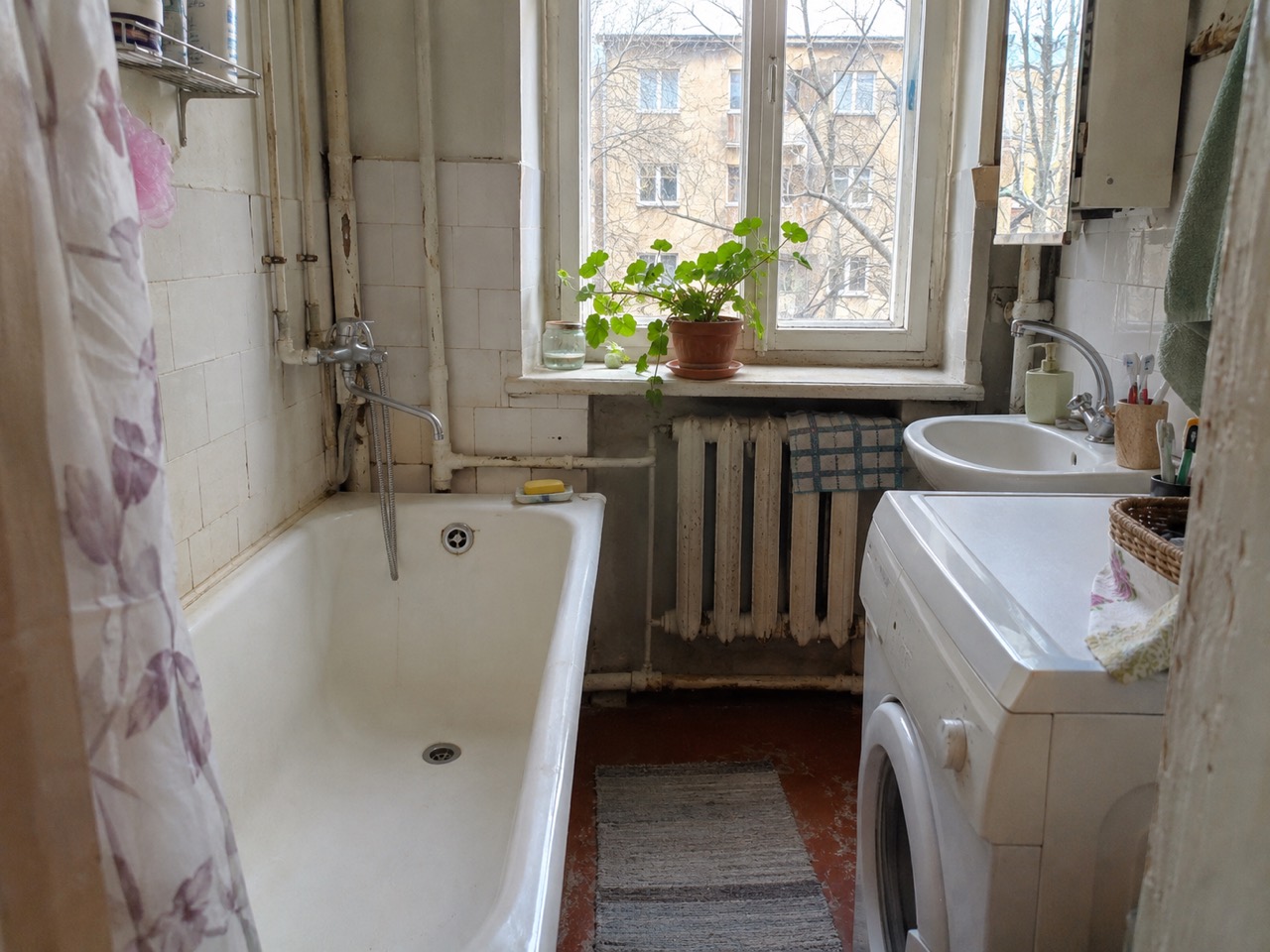
Signs that water is getting through the joint: damp under the bath or behind the panel, tiles next to the bath coming loose, and a stain appearing on the neighbours' ceiling below after a shower, but not after filling the bath.
The joint is not always to blame. Check it like this: fill the bath with the plug in and wait. If it gets damp under the bath, the trap or the overflow is leaking, and then you need trap replacement. If it only gets damp after a shower, when water splashes onto the wall, the fault is in the joint.
An acrylic or steel bath flexes slightly under the weight of water and a person. If the feet are not tightened or the bath has no firm support, the joint stretches every time and after a while comes away from the wall. A new joint will crack again if the bath is not secured first.
That is why, before sealing, we check that the bath does not move and adjust the feet if needed. The silicone is applied with the bath filled with water: that way the joint cures with the bath under load and is not stretched later.
Mould penetrates into silicone and cannot be removed with cleaning products. Such a joint can only be replaced. Before the new joint, the area is cleaned and dried, otherwise the mould soon comes back.
A frequent cause of mould is poor ventilation in the bathroom. That is not plumbing work, but it is worth thinking about so the new joint stays clean longer. Regrouting tiles is also a separate job.
Removing the old silicone
The old silicone is cut out and scraped off, and the residue is removed with a solvent so the new silicone sticks to a clean surface.
Cleaning and drying
The joint is cleaned of mould, degreased and left to dry completely.
Securing the bath
We check that the bath does not move and fill it with water.
Wide gap
If the gap between the bath and the wall is wide, a foam backer rod is pushed in first so the silicone layer is even.
The new joint
Sanitary silicone with an anti-mould additive is applied, smoothed and left to cure. The bath is not used in the meantime; the time is given by the silicone manufacturer.
The same job is needed at the shower tray, the sink and the kitchen worktop. If joints need replacing in several places, it is better value to do them in one visit. If the shower cabin itself is leaking, see shower cabin repair.
We do not give a fixed price for this job, because it varies a lot. The price depends on the length of the joint (just the bath, or also the shower, sink and worktop), how hard the old silicone and mould are to remove, whether the gap is wide and needs a backer rod, and whether the bath moves and has to be secured first.
It is a small job, so it makes sense to combine it with other work in the bathroom, for example faucet repair or trap replacement. Describe the joint in the form, and we will give the price after an inspection and agree it before the work starts.
The price does not include fixing the cause of the mould (ventilation, a leak), regrouting tiles, or restoring the bath enamel, which we do not offer. If the bath is old and needs replacing, see bath replacement. All jobs are on the plumbing services page.
| Service | Price | Notes |
|---|---|---|
| Bath joint sealing | price after inspection | depends on the joint length, the old silicone and the condition of the bath |
After submitting the form, we'll contact you within 5 minutes!
We'll contact you shortly.