
Heating system flushing in a private house removes from the radiators and pipes the sludge, rust and deposits that build up in the system water over the years. The sign is radiators that are hot at the top but cold at the bottom, or rooms that warm up unevenly. We give the price after inspection, because it depends on the size of the house, the method and how clogged the system is.
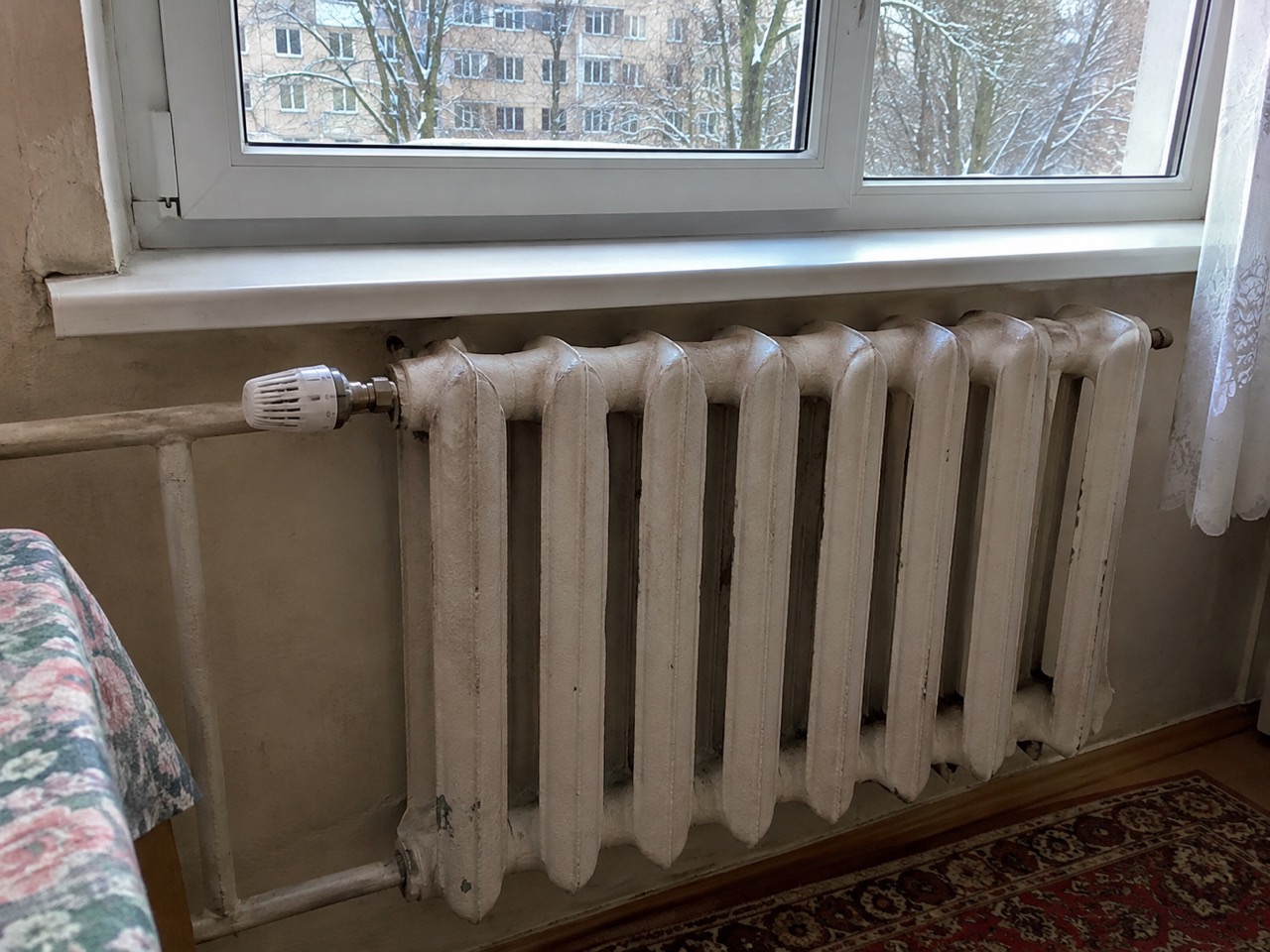
Flushing cleans the radiators, pipes and underfloor heating circuits. Boiler servicing is not included in this job.
Hydropneumatic flushing uses water and pulses of compressed air. These loosen the deposits in the pipes and radiators, and the water flushes them out. The chemical-free method is suitable when the deposits are mainly sludge and loose rust.
In chemical flushing, a special agent circulates in the system for a while to break down the deposits, then it is neutralised and the system is flushed out with clean water. It is used when the deposits are hard or the system is heavily clogged.
If only one or two radiators are clogged, they can be removed and flushed separately. That is a smaller job than flushing the whole system.
Inspection
We find out the floor area of the house, the number of radiators and underfloor heating circuits, the pipe material and the symptoms. The method is chosen based on this.
Preparing the system
The heating is switched off, the system is cooled down and the flushing unit is connected. If there is antifreeze in the system, it is collected.
Flushing
The system is flushed section by section or circuit by circuit until the water coming out runs clean.
Refilling
The system is refilled with water or antifreeze and, if agreed, a corrosion inhibitor is added.
Bleeding and testing
The radiators are bled, the pressure and joints are checked, and after start-up we make sure the radiators warm up evenly.
In an apartment building with central heating, the radiators and risers are part of the whole building's heating system. The Apartment Property Law (Dzīvokļa īpašuma likums) also counts heating elements whose operation depends on the shared utilities as common property. That is why flushing the building's system is organised by the house manager, not by an individual apartment owner.
If one radiator in your apartment heats poorly and you are going to replace it, see radiator replacement, which describes getting approval from the house manager.
There is no single starting price for heating system flushing, because the amount of work varies several times over from one house to another. We give the price after inspection and agree it before the work starts. It depends on:
The price does not include chemical flushing agents and inhibitor, unless agreed, or boiler servicing. If a radiator or pipe has to be replaced after flushing, we agree it separately: pipe repair from €35, radiator replacement from €70. For new underfloor heating see water underfloor heating installation, and for all jobs the plumbing services page.
| Service | Price | Notes |
|---|---|---|
| Heating system flushing | after inspection | depends on floor area, number of radiators, method and degree of clogging |
| Radiator replacement | from €70 | for 1 radiator, if it needs replacing after flushing |
A closed heating system in a private house runs at a set pressure, shown on the gauge by the boiler or the manifold. If the pressure keeps dropping and you have to top up the system with water, there is a leak somewhere or the expansion vessel is faulty. If the pressure rises sharply as the system heats up, the expansion vessel is short of air or too small.
After flushing or a repair, the system is refilled slowly so the air has time to escape, and then every radiator is bled, starting from the lowest floor. After the first heat-up the pressure is checked again, because more air comes out. The right pressure is set by the boiler and system manufacturer, not by one figure for every house.
We do not adjust or service the boiler itself as part of this work. If a radiator stays cold after refilling, see radiator repair. We agree the price before the work.
Balancing means adjusting how much hot water goes to each radiator or underfloor loop. In an unbalanced system the water takes the easiest route: radiators close to the boiler are hot, while the far ones and those upstairs warm up poorly, even though the system is clean and bled.
If a loop does not heat at all, balancing will not help and the cause lies elsewhere: underfloor heating repair. We give the price after an inspection, because it depends on the number of radiators and loops.
Sources
After submitting, we'll contact you within 5 minutes!
We'll contact you within 5 minutes!