
Water most often does not drain away because grease, hair or wipes have built up in the trap or in the pipe up to the riser. If one sink or shower is blocked, you can often clear it yourself with a plunger or by taking the trap apart. If water rises in several fixtures at once or comes up when the neighbours use water, the fault is most likely in the riser, and that is a job for the house manager.
| What you see | Most likely location | Who deals with it |
|---|---|---|
| One sink or shower drains slowly | The trap or the floor drain grate | You or a plumber |
| Both the sink and the bath will not drain | The shared pipe in the apartment up to the riser | Plumber |
| The toilet will not flush, water rises to the rim | The toilet's U-bend or the pipe behind it | Plunger, then a plumber |
| The bath gurgles when the toilet is flushed; water comes up when the neighbours use water | The sewer riser | House manager |
| Drains normally, but smells | A dried-out or faulty trap, ventilation | See sewage smell |
Stop using water
Do not flush the toilet again or run water until it is clear where it is going. That way you avoid an overflow.
Clean the grate and the floor drain
In the shower and bath the blockage is often right under the grate: hair and soap scum. Remove it with a gloved hand or a hook.
Hot water for the kitchen sink
If grease is to blame, hot tap water helps. Do not use boiling water: plastic traps and seals are not designed for it, and a toilet's ceramic can crack from a sudden change in temperature.
Plunger
Block the overflow opening with a damp cloth so the pressure does not escape, and work the plunger 10–15 times. For a toilet, use a plunger with a longer cup.
Clean the trap
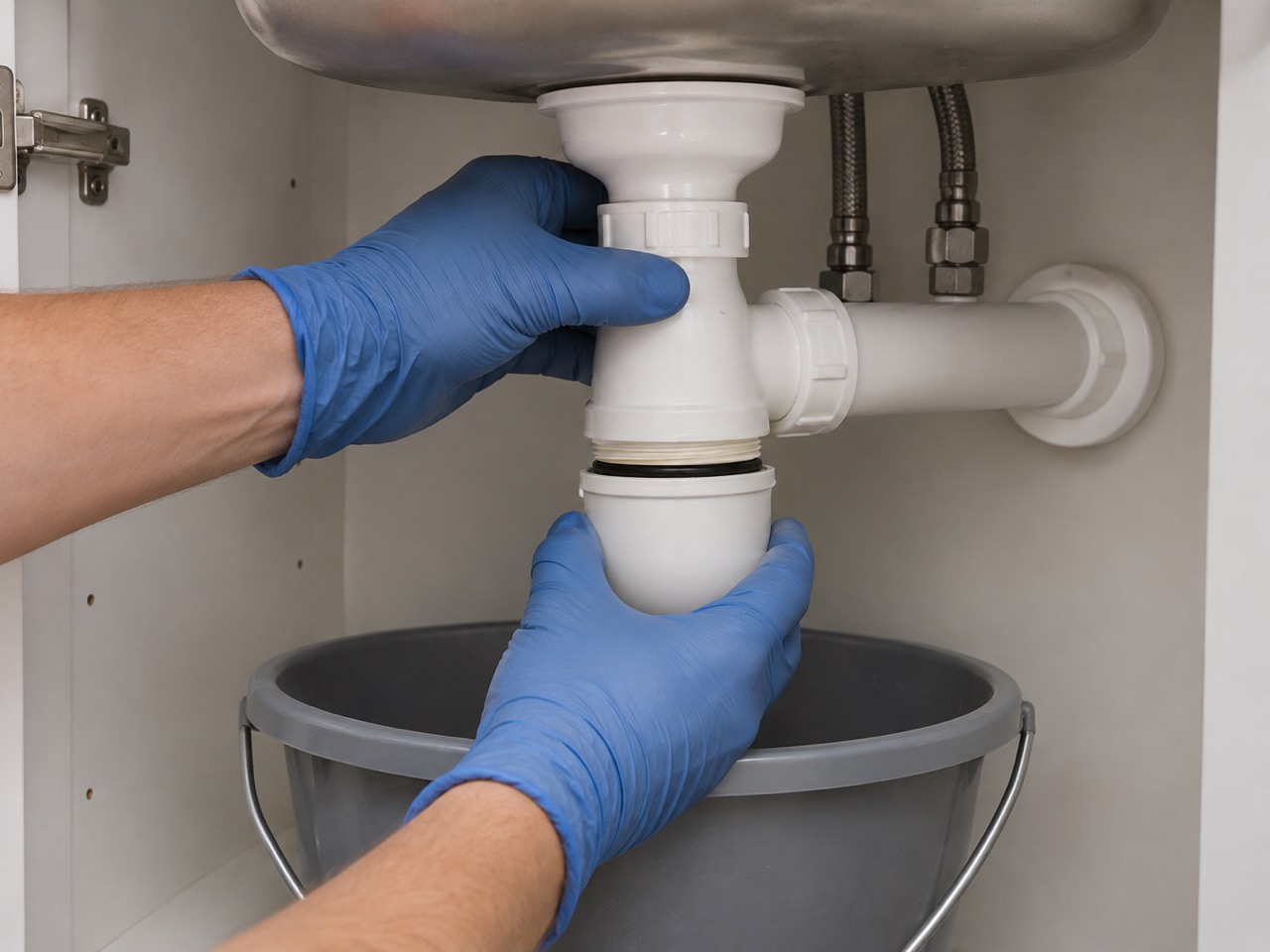
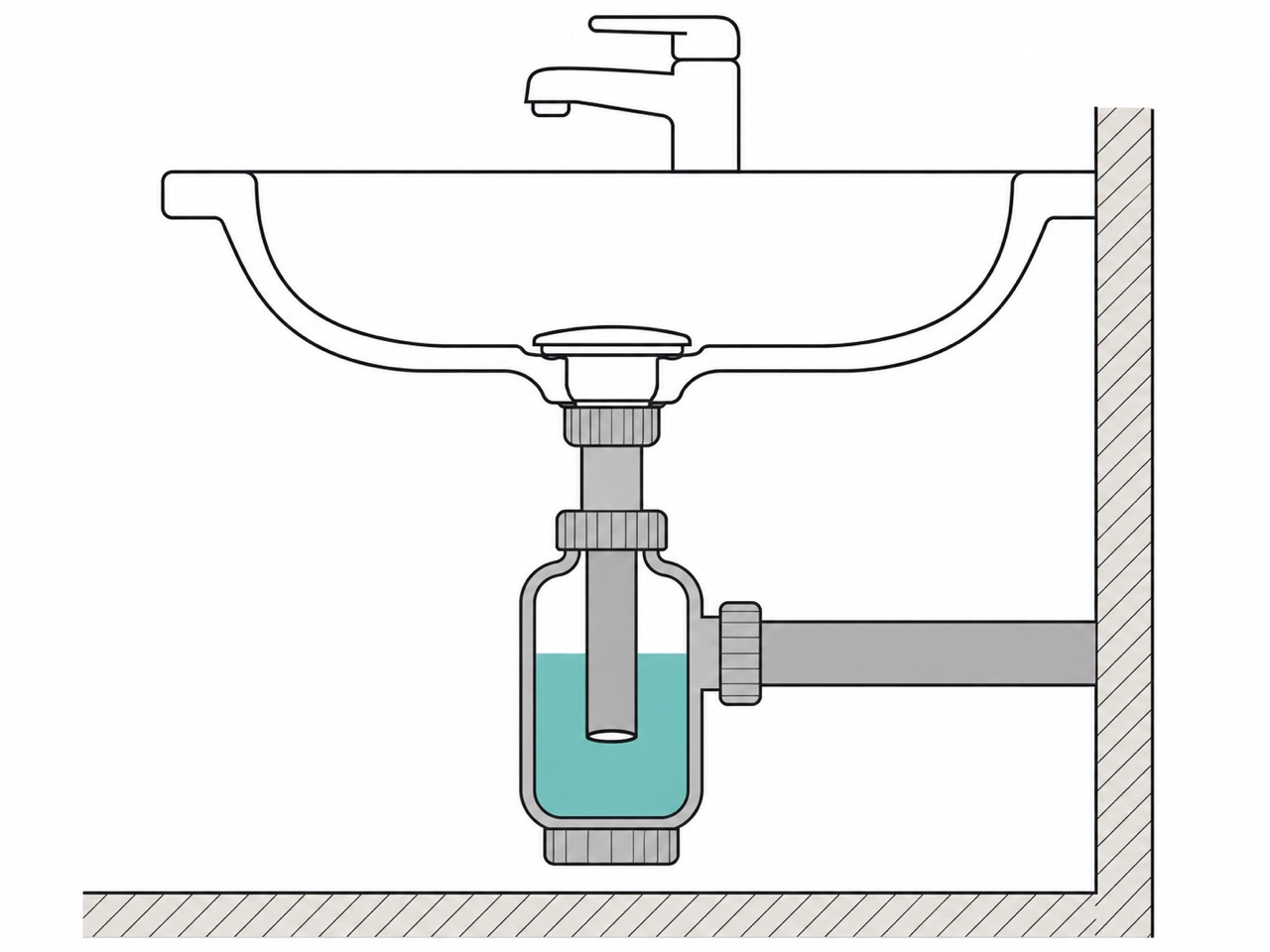
Put a bucket under the sink, unscrew the trap bowl, clean it and check that the seal is in place. After putting it back together, run the water and check that nothing drips.
If the water still stands after these steps, the blockage is deeper in the pipe, and the next step is a drain snake or flushing.
If you have already used chemicals, tell the plumber which product and when. This is important for their safety.
The apartment owner owns the pipes up to the common riser, but the riser is the building's common property. Technical maintenance and routine repair of the building's utilities are a mandatory duty of the house manager. Rīgas ūdens explains that the building owner is responsible for a blocked sewer inside the building, because the company is responsible only for its own networks up to the outer wall of the building.
Signs of a blocked riser: water rises in the bath or shower tray when the neighbours upstairs use water; several fixtures gurgle at the same time; the neighbours have the problem too. In ground floor apartments the water usually appears first, because the blockage is often where the riser turns into the horizontal drain.
What to do: stop using water, warn the neighbours above you and report it to the house manager straight away. If waste water is already on the floor, act as you would for a flooded apartment and record the damage.
The plumber looks for the blockage from the nearest opening: through the trap, an access hatch or the toilet connection. Pipes are cleaned with a drain snake or by flushing, without opening walls. If blockages keep coming back, the pipe can be inspected with a camera.
Drain cleaning costs from €40, and smell diagnosis and repair from €35. The price depends on where the blockage is and how long it is, access and whether the blockage keeps coming back. We agree the price before the work starts.
| Service | Price | Notes |
|---|---|---|
| Drain cleaning | from €40 | sink, bath, shower, toilet, pipe in the apartment |
| Sewage smell diagnosis and repair | from €35 | traps, seals, connections |
In a kitchen sink, the blockage is most often not in the trap but in the horizontal pipe from the sink to the riser. Grease from dishes and pans cools in the pipe, sticks to the walls and over the years narrows the inside of the pipe. Food scraps stick to the grease, and at some point the water stops draining.
Hot tap water and cleaning the trap help if the layer of grease is thin. If water is standing again after a few days, the pipe has to be cleaned along its full length. A plumber does this with a drain snake through the trap connection or an access hatch, then flushes the pipe with hot water. If a dishwasher is connected to the sink, its drain hose is checked too.
Cleaning starts from €40: drain cleaning. If an old pipe has too little fall, grease will build up again, and then it is better to replace that section: sewer pipe replacement.
If the toilet is blocked, the first rule is not to flush it again: a second flush often makes the bowl overflow. Wait until the water level drops a little, then use a toilet plunger with a longer head. If the water drains away after a few minutes, the blockage was in the toilet bend.
If the plunger does not help, the cause is usually an object stuck in the bend: a toy, a hygiene product, wet wipes. Then the plumber uses a toilet auger that does not scratch the glaze. If the object does not come out, the toilet is removed, cleaned from below and refitted with a new pan connector.
If the bath gurgles along with the toilet or water rises in the shower, the blockage is further along the pipe or in the riser, and the toilet itself is not to blame. If the toilet does not flush properly even without a blockage, see toilet repair.
Sources
After submitting the form, we'll contact you within 5 minutes!
We'll contact you shortly.