
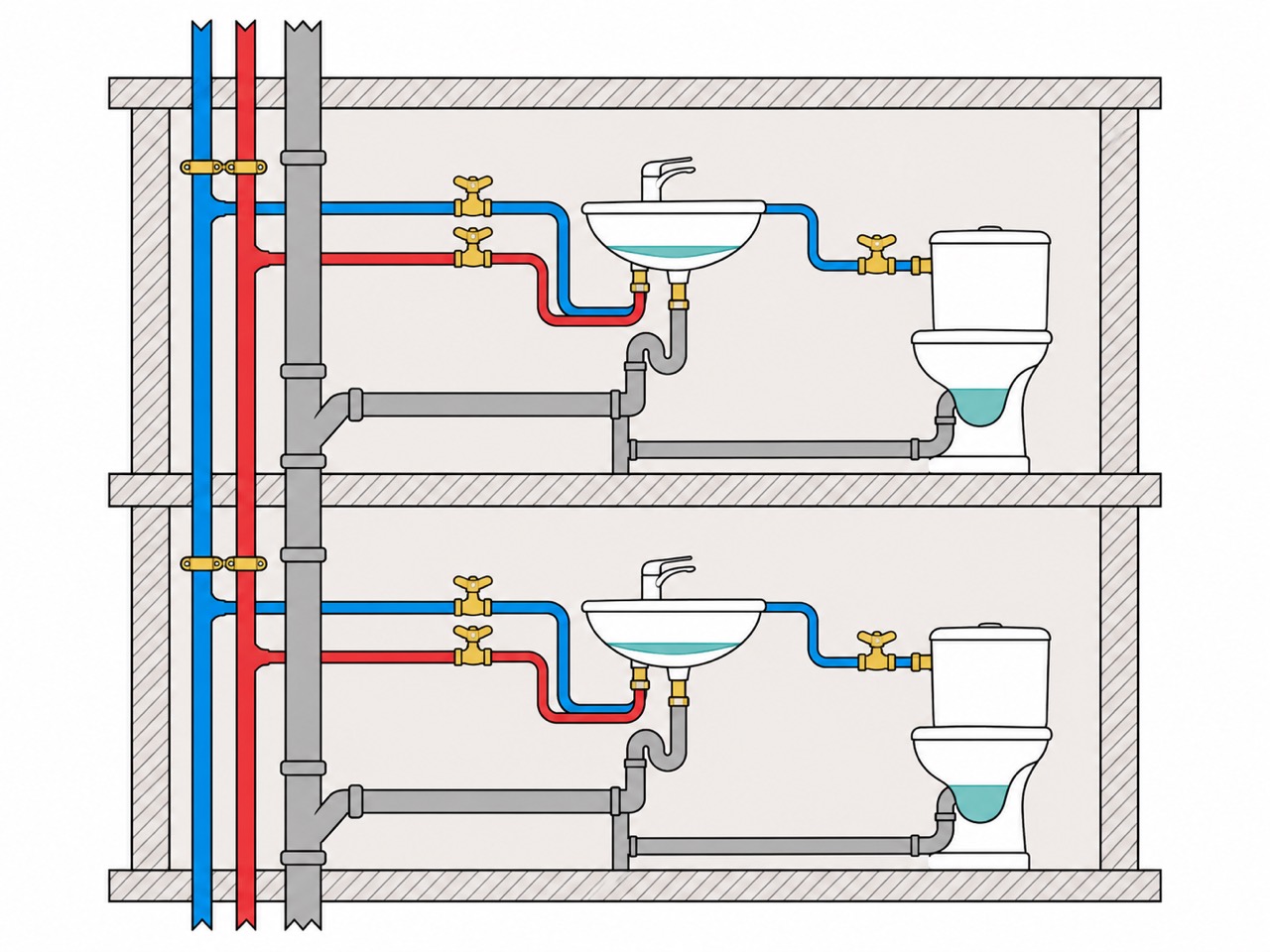
Who pays for riser replacement? All the apartment owners in the building together, because risers are the building's common property. The owners' meeting decides on the replacement and the money, and the house manager organises the work. Your own responsibility is the pipes in the apartment after the riser and the inlet valve, up to the taps and appliances.
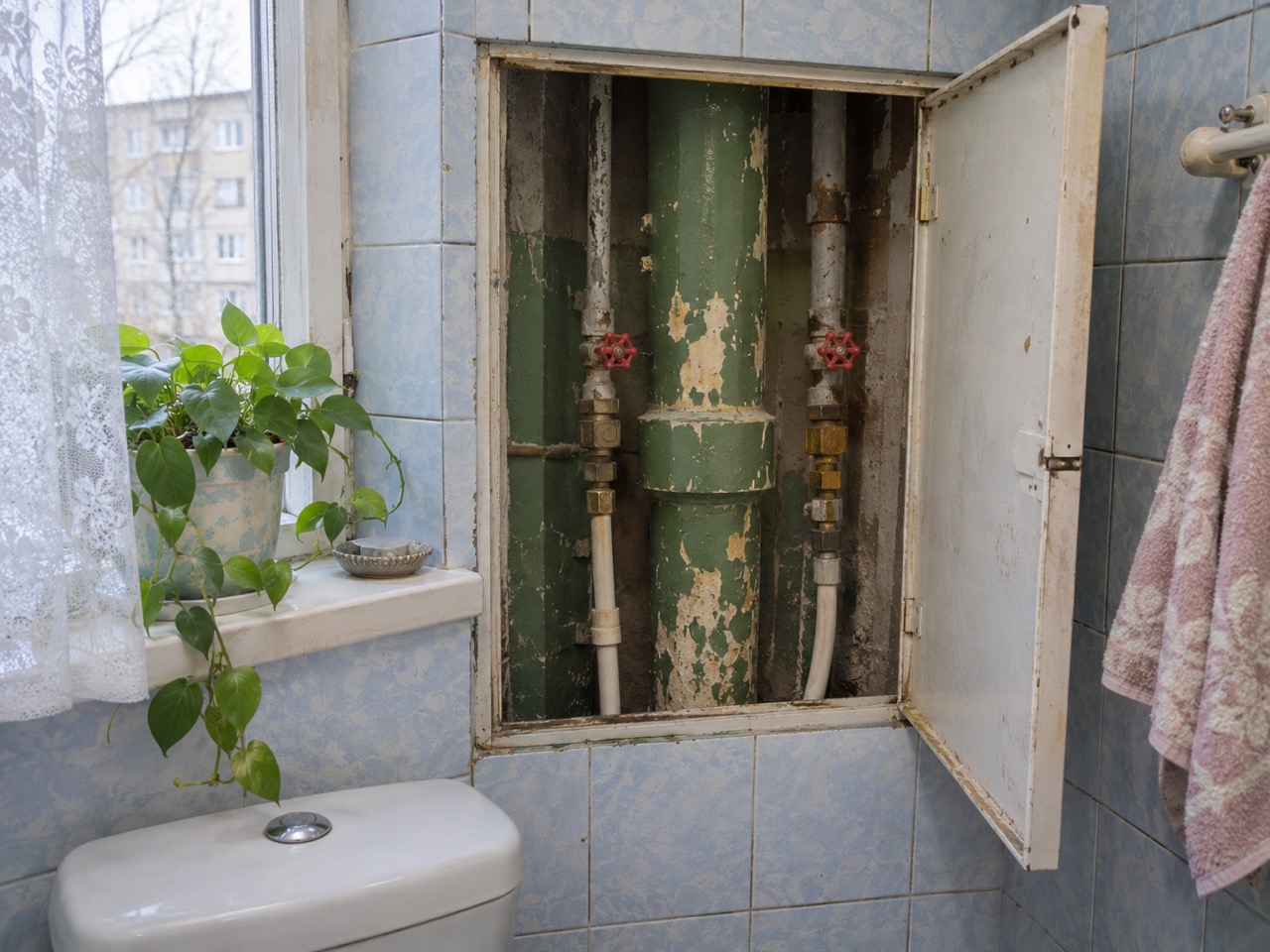
The Apartment Property Law (Dzīvokļa īpašuma likums) draws the line at the riser. An apartment includes the utility networks and services up to the common risers, as well as the toilet, shower and bath fittings. The building's common property includes the utility systems that serve the building, which means the water, sewer and heating risers too.
In 2023, in case SKC-535/2023, the Senate of the Supreme Court found that the water inlet valve fitted where the supply enters the apartment is inseparably linked to the common utilities and is part of the building's shared water supply system. In practice this is often called the boundary: up to the first valve in the apartment it is the building's responsibility, and after it, yours.
| Building's common property | Apartment owner's responsibility |
|---|---|
| Cold and hot water risers | Water pipes in the apartment after the inlet valve |
| Sewer riser with its branch fitting | Waste pipes in the apartment up to the connection to the riser |
| Inlet valve where the supply enters the apartment (Senate judgment) | Mixer taps, traps, toilet, bath, sink, shower cabin |
| Heating risers and the building's heating substation | Washing machine and dishwasher connection |
Decisions on common property are made by the owners' meeting. A decision is adopted if owners representing more than half of the apartment properties in the building vote for it, and it is binding on everyone, including those who voted against.
Each apartment owner covers the costs in line with their undivided share of the common property, which depends on the floor area of the apartment. Explanations on LV portāls state that riser replacement is paid for by all apartment owners, not only by those whose apartments the riser passes through. The money can come from the building's savings fund or a separate payment can be set.
The house manager's mandatory duties are inspecting the building's utilities, technical maintenance and routine repairs. If the house manager finds that the risers need replacing, they inform the owners and offer financing options. If the owners' meeting approves the replacement, the house manager organises the work.
Not on your own. The law states that apartment owners cannot themselves exercise rights that belong to the owners' meeting, and construction work in an apartment that affects common property needs the meeting's consent. The section of riser in your apartment is part of the whole building's system, and replacing it means shutting off the water for the entire riser.
If you are planning a bathroom renovation, write to the house manager in good time and ask whether the riser section can be replaced at the same time and on what terms. Agree in writing who pays for this section and what material is used before the work, not afterwards.
The apartment owner is obliged to let specialists authorised by the owners' meeting or the house manager carry out work in the apartment that is needed for the building's utilities to work normally, and to allow the apartment to be inspected. This also applies to riser replacement.
In many Riga apartments the risers are boxed in or tiled over. Who restores the finishes after the replacement is not set out in the sections of the law we checked, so ask the house manager about this in writing before the work and ask for it to be included in the meeting's decision or the description of works. When renovating the bathroom, leave an access hatch at the riser.
The LV portāls summary of Cabinet Regulation No. 906 states that cold water pipes and sewer pipes have a service life of 15–30 years depending on the type, and sewer pipework with cast iron fittings 60 years. Signs that it is time to act: rust stains and damp around joints, repeated leaks, rusty water after a shutdown, a smell from the sewer riser.
Record the problem
Photograph leaks, rust and damp patches and write down the dates. This will be useful for the request and, if the neighbours get flooded, for documenting the flood.
Write to the house manager
Submit a written request and ask for the risers to be inspected. Ask whether riser replacement is in the building's work plan and when.
Propose a decision of the owners' meeting
If replacement is needed but not planned, a decision on the work and its financing can be taken at a general meeting or by a poll of owners. The house manager can help prepare it.
Prepare access
Find out where the riser runs through your apartment and whether it is covered by boxing or tiles. Agree on restoring the finishes before the work starts.
Replace your own pipes at the same time
Once the riser is new, it makes sense to replace the old pipes in the apartment and the valves after the inlet too. That is your own separate property, and you can order the work yourself.
Riser replacement in one apartment costs from €100 per riser within one floor, but the final amount depends on the building. The price is affected most by:
The price does not include materials, restoring tiles and boxing, or shutting off and draining the riser, which the house manager or their service company does according to their own price list.
If the building already has a decision of the owners' meeting, we carry out riser replacement in agreement with the house manager, and we agree the price before the work starts. The pipes in your apartment can be replaced separately: pipe repair costs from €35.
| Service | Price | Notes |
|---|---|---|
| Riser replacement | from €100 | depends on the number of floors, the material and access; we agree the price before the work |
| Pipe repair in an apartment | from €35 | pipes after the inlet valve |
Responsibility for a blocked drain lies with whoever owns the section of pipe where the blockage is. The boundary is the same as for the water supply: the pipes and traps in the apartment up to the connection to the riser belong to the apartment owner, while the riser and the horizontal main drain in the basement are the building's common property.
| Where the blockage is | Who deals with it and pays |
|---|---|
| Trap, toilet bend, pipe in the apartment | The apartment owner |
| Sewer riser or main drain in the basement | The building: the house manager, from the building's funds |
| City network beyond the building's outer wall | Rīgas ūdens |
If the riser is blocked, tell the house manager, because routine repair of the building's services is their duty. If the blockage was caused by objects someone flushed, the question of damages is handled by the house manager and the owners involved.
Before you contact the house manager or book a plumber, find out whether the problem is only in your apartment. If a single sink does not drain, the fault is almost always in its trap. If water rises in your bath when someone upstairs lets water out, or the neighbours have the same problem, the riser is most likely blocked.
We clean the pipes in your apartment from €40: drain cleaning. If we see during cleaning that the blockage is in the riser, we tell you, and from there the house manager deals with it. If the old pipe itself is cracked or narrowed, see sewer pipe replacement. We describe the first steps you can take yourself in the article drain not draining.
Sources
After submitting the form, we'll contact you within 5 minutes!
We'll contact you shortly.